



Fuel Prices Set to Rise from September 1, 2026 — COMAC Outlook Report
The Chamber of Oil Marketing Companies (COMAC) has released its latest Outlook Report projecting fuel price movements for the first pricing window of September 2026.
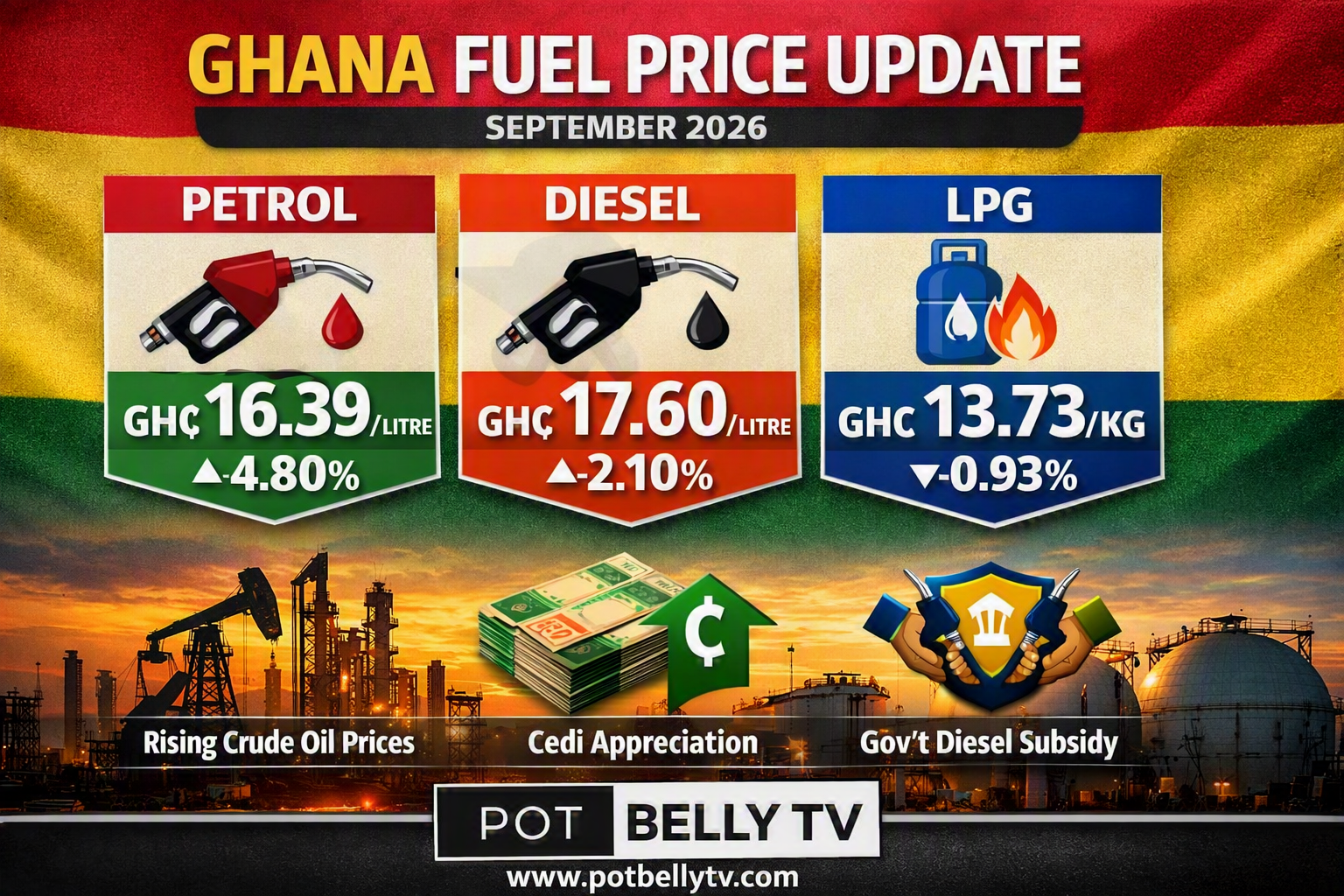
According to the report, petrol prices are expected to rise by up to 4.80%, with a litre selling at GH¢16.39, while diesel will increase by 2.10%, reaching GH¢17.60 per litre. In contrast, LPG will see a slight drop of 0.93%, bringing the price to GH¢13.73 per kilogramme.
📈 Key Drivers of Price Changes
COMAC attributes the upward adjustments to rising crude oil prices on the international market and higher refined product costs.
- Crude oil prices climbed by 1.75%, from US$90.53/bbl to US$92.11/bbl.
- Petrol recorded the sharpest increase at 8.86%, followed by diesel (5.51%) and LPG (3.31%).
- The cedi appreciated by 3.64% to GH¢11.3697/US$, reversing three consecutive windows of depreciation and marking its strongest level since June 2026.
Despite the cedi’s recovery, global price pressures continue to drive local adjustments.
🏛️ Government Intervention
Government sources confirmed to JOY BUSINESS that the GH¢2 per litre reduction in the regulatory margin on diesel will be extended into the September pricing window. This measure, initially temporary, aims to cushion consumers against rising fuel costs and prevent sharper increases at the pumps.
⚙️ New Price Floors
The National Petroleum Authority (NPA) has also revised the price floor for petroleum products effective September 1–16, 2026:
| Product | Old Price (GH¢) | New Price (GH¢) | Change (%) |
|---|---|---|---|
| Petrol | 13.92 | 14.53 | +4.38% |
| Diesel | 15.19 | 15.60 | +2.69% |
| LPG (per kg) | 10.98 | 10.85 | -1.18% |
No oil marketing company is permitted to sell below these benchmarks during the pricing window.
🛢️ Market Outlook
With over 200 oil marketing companies operating nationwide, analysts expect some firms to adjust prices immediately from 6 a.m. on September 1, while others may monitor competitors before revising pump rates.
The overall trend points to moderate increases in petrol and diesel prices, tempered by government intervention and currency stability.